Good News? US Senators Seek to Cut Misuse of Antipsychotics

This is a controversial matter……. I don’t even know what to say about it……….. my mother is on antipsychotics that were given to her by a trained psychiatrist to “stabilize” her during her month-long stay at a geriatric psych unit. They do this……….. stabilizing…………… because many facilities (even the “memory care” units) won’t accept behavioral patients unless they are medicated……………… it’s a lose-lose situation, but it’s certainly not uncommon………………. And yes, we all know about “black box” warnings.

So what do you do? For those of us coping with a behavioral parent, our options are limited, and often the only course of action is Seroquel, Lithium, Depakote, Zyprexa, two or more of the above, and the list goes on………………………

Is it a disturbing practice? Yes.

Is there a choice? In our case, no. We had no choice.

Fortunately, Washington, with their first-rate, life-long health care, is on the case……………….

Inside voice…………… I wonder if the esteemed senators below would be willing to take in behavioral dementia patient who has been asked to leave yet another memory care unit or assisted living facility?

So, what do you think about antipsychotics?

U.S. Senators Herb Kohl, D-Wis., Chuck Grassley, R-Iowa, and Richard Blumenthal, D-Conn., today filed an amendment seeking to combat the costly, widespread and inappropriate use of antipsychotics in nursing homes.

“The overuse of antipsychotics is a common and well-recognized problem that puts frail elders at risk and costs taxpayers hundreds of millions of dollars each year,” Kohl said. “We need a new policy that helps to ensure that these drugs are being appropriately used to treat people with mental illnesses, not used to curb behavioral symptoms of Alzheimer’s or other dementias.”

“This amendment responds to alarming reports about the use of antipsychotic drugs with nursing home residents,” Grassley said. “It’s intended to empower these residents and their loved ones in the decisions about the drugs prescribed for them.”

“This measure is responsive to mounting evidence that antipsychotics are being misused and overused in the nursing homes we trust to care for our loved ones,” Blumenthal said. “The amendment will do what is necessary to curb this deeply concerning practice, putting the power to make key health care decisions back into the appropriate hands and eliminating unnecessary costs to taxpayers.”

The amendment to S. 3187, the Food and Drug Administration Safety and Innovation Act would require the Health and Human Services Secretary to issue standardized protocols for obtaining informed consent, or authorization from patients or their designated health care agents or legal representatives, acknowledging possible risks and side effects associated with the antipsychotic, as well as alternative treatment options, before administering the drug for off-label use. While the Food and Drug Administration (FDA) has approved antipsychotic drugs to treat an array of psychiatric conditions, numerous studies conducted during the last decade have concluded that these medications can be harmful when used by frail elders with dementia who do not have a diagnosis of serious mental illness. In fact, the FDA issued two “black box” warnings citing increased risk of death when these drugs are used to treat elderly patients with dementia.

Last year, the Health and Human Services Office of the Inspector General (HHS OIG) issued a report showing that over a six-month period, 305,000, or 14 percent, of the nation’s 2.1 million elderly nursing home residents had at least one Medicare or Medicaid claim for atypical antipsychotics. The HHS OIG also found that 83 percent of Medicare claims for atypical antipsychotic drugs for elderly nursing home residents were associated with off-label conditions and that 88 percent were associated with a condition specified in the FDA box warning. Further, it showed that more than half of the 1.4 million claims for atypical antipsychotic drugs, totaling $116.5 million, failed to comply with Medicare reimbursement criteria. The amendment also calls for a new prescriber education program to promote high-quality, evidence-based treatments, including non-pharmacological interventions. The prescriber education programs would be funded through settlements, penalties and damages recovered in cases related to off-label marketing of prescription drugs.

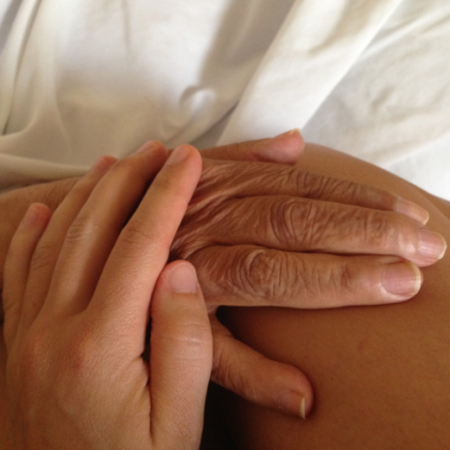
>>Flickr pic by Ashley Rose

Leave a Comment

Filed under Alzheimer's Disease & Dementia, Behaviors, Frontotemporal Dementia (Pick's), Legal Mumbo-Jumbo, News, Politics

New Documentary: iPods, Music and Alzheimer’s disease


This is a documentary film in production. Produced, Directed and Written by Michael Rossato-Bennett. Director of Photography – Shachar Langlev 
This is an amazing story about music’s ability to awaken ‘lost’ minds. It will be on PBS within one year.

Leave a Comment

Filed under Alzheimer's Disease & Dementia

Mother’s Day & Dementia… My Own Op-Ed (please share, please spread the word)

Another Mother’s Day rolls on by….

Mother’s Day is an awkward holiday. I say awkward because while I understand why we make such a fuss about this day, I can’t help but find it to be somewhat, well, insensitive — to put it bluntly, Mother’s Day is another reminder of what I, and others like me, don’t have. My mother is alive, however, she is far from well. My mother is slowly dying from Frontotemporal dementia. FTD, or Pick’s disease as it’s sometimes called, affects the frontal and temporal lobes of the brain, or the area of the brain that makes us who we are. Call it your personality center. Like Alzheimer’s disease, FTD can cause memory loss, but it can also cause dramatic personality changes, including apathy; many lose their ability to communicate, and because the disease gnaws away at the gray matter that controls behavior, many with FTD act out; they may yell, become socially inappropriate, impulsive, aggressive and completely incapable of understanding that their actions have consequences. Adding to an already challenging and misunderstood situation, some individuals, like my mother earlier on, don’t even realize that something is terribly wrong.

The result for many of us with a “behavioral” parent is that we live with the stress, the stares, the comments, or worse, we live in fear of being asked to leave yet another assisted living facility.

Dementia is not a quiet disease.

Alzheimer’s disease is the number one type of dementia, accounting for about 50-to-80 percent of dementia cases. Unfortunately, more needs to be done in terms of educating the general public about this and other, lesser-known dementias like FTD. Alzheimer’s disease is the sixth leading cause of death in the U.S., and unlike diseases that were once considered a death sentence, i.e.: heart disease, breast cancer, prostate cancer, HIV/AIDS, and stroke, dementia can’t be cured, prevented or even slowed. This is not a manageable disease, and much more needs to be done in terms of funding and research. Today, more than five million Americans have Alzheimer’s disease and that number is expected to hit 16 million by 2050. To put that into perspective, according to the 2011 U.S. Census 3,880,244 people live in Maricopa County alone, and 6,482,505 live in the state of Arizona.

This disease is also expensive, and family members are often the ones who do the heavy lifting — emotionally, physically and financially. Just last year, some 15 million family and friends provided over 17 billion hours of unpaid caregiving. If you put a price tag on their time, it would amount to around $210.5 billion.

This is the calm before the Tsunami.

I always say, we have no survivors. My mother can’t tell you her story. She can’t even tell you if she is in pain. It’s difficult to talk about who my mother was because she’s not dead — to talk about her in the past tense, to say “she was” sounds so cruel; and yet, sometimes the only way to describe the woman who raised me is in the past tense. My mother was a sweet, gentle soul who devoted herself to her family, to her friends, even to complete strangers. Everyone who knew my mother loved her. She was the heart of our little family. Though the disease has robbed her of so much, her core — that gentle soul — remains intact. Today, when someone approaches her, she just wants to hold their hand or give them a kiss.

Like a child, she seeks love and affection.

As each year rolls into the next — I started noticing something was wrong in 2004… I was 27 — my memories of who she was before FTD fade. I suppose that’s time doing what it does best. And then Mother’s Day comes around. For me, it’s a tragic, in-your-face reminder of what I long for most. Seeing daughters having brunch with their mothers, laughing and talking… I tend to turn away. It’s just easier that way.

My mother doesn’t know my name, she doesn’t even know who she is. Thankfully, she does recognize me. Every time she sees me, she smiles and showers me with kisses. She tucks my hair behind my ear. She takes my hand and, in her own way, tells me about her day as we walk. Even though my mother’s language ability has been reduced to no more than a few words, I understand her. She is my mother, after all.

Yes, I would love to enjoy the kind of relationship that develops between adult daughters and their mothers — that special friendship which occurs later in life. But that’s not my reality. It never will be. This is my reality and I’ll take what I can get because we’re on borrowed time. One day, she won’t recognize me. She’ll just stare.

Hopefully, though, she’ll still take my hand and walk with me.

To learn more about Alzheimer’s disease and other related dementias or to make a donation visit www.alz.or/dsw.

6 Comments

Filed under Alzheimer's Disease & Dementia, Coping, Frontotemporal Dementia (Pick's), Holidays, News